

UN Humanitarian Day 2026 - Why it Matters for the World?
August 19, 2026
A humanitarian crisis rarely stays inside one border. A flood or forest fire can push families across regions. A war can disrupt food supplies far from the front line. A disease outbreak can expose weak health systems across continents. When people lose safety, shelter, food, medicine, or family, the effects travel.
That is why World Humanitarian Day matters.
Observed every year on August 19, the day honors humanitarian workers who risk their lives to help others and draws attention to the millions of people caught in emergencies. United Nations Humanitarian Day 2026 is more than a date on the calendar. It is a reminder that the world’s response to suffering must be practical, fast, fair, and deeply human.
In 2026, that message will carry special weight. Conflicts are lasting longer. Climate disasters are becoming more severe. Displacement is reshaping communities. Humanitarian workers face growing danger while trying to reach people who need help most.
World Humanitarian Day asks a basic question that every country, institution, and citizen should take seriously: when people are in crisis, will the world look away or show up?

What World Humanitarian Day means
World Humanitarian Day was created to honour people who serve in emergencies and to remember those who have been killed while doing humanitarian work. The date, August 19, marks the 2003 bombing of the United Nations headquarters at the Canal Hotel in Baghdad. The attack killed 22 people, including UN envoy Sérgio Vieira de Mello, and injured many others.
The day is not only about tragedy. It is also about duty.
Humanitarian work rests on a few core principles:
Humanity
People in distress deserve help and dignity.
Impartiality
Aid should go to people based on need, not nationality, religion, politics, or identity.
Neutrality
Humanitarian workers must not take sides in conflict.
Independence
Relief work should remain separate from political, military, or economic goals.
These principles sound simple. In practice, they can be hard to protect. Aid workers often operate in places where roads are destroyed, armed groups control access, misinformation spreads quickly, and basic services have collapsed.
World Humanitarian Day keeps those principles visible. It says that helping civilians in crisis is not optional. It is a moral and global responsibility.
Why the 2026 observance will matter
August 19, 2026, will arrive in a world under pressure from many directions at once. Humanitarian needs do not come from one cause. They grow where conflict, poverty, weak infrastructure, climate stress, and political instability overlap.
A family may flee fighting, only to face hunger in a crowded settlement. A child may survive a cyclone, then lose months of school. A pregnant person may reach a clinic, only to find there are no supplies. A farmer may lose crops to drought and then face rising food prices.
These are not isolated stories. They are patterns.
Humanitarian action matters in 2026 because it helps protect life during the hardest hours and days of a crisis. It also helps prevent a bad situation from becoming worse. Clean water can stop disease. Emergency food can keep children from severe hunger. Safe shelter can reduce exposure and violence. Medical supplies can keep health workers going after hospitals are damaged.
The day also matters because attention saves lives. When the public pays attention, leaders face pressure to act. When donors pay attention, relief groups can plan beyond the next shipment. When news coverage fades, funding and access often become harder.
World Humanitarian Day keeps the human cost in view.
Humanitarian need is becoming more complex
Crisis response once looked more straightforward in many places. A disaster happened, aid arrived, communities rebuilt. That still happens, but many emergencies now overlap and stretch across years.
Climate extremes are hitting harder
Floods, heat waves, storms, wildfires, and droughts are placing more people at risk. Climate-related disasters can wipe out homes, crops, roads, wells, and clinics in a matter of hours. They can also cause slow emergencies, such as water shortages or repeated crop failure.
The hardest-hit communities are often the least responsible for global emissions and the least able to recover quickly. That makes climate justice part of humanitarian work.
Aid in 2026 must reach people after disasters, but it also must support preparation before disasters strike. Early warning systems, stronger shelters, local evacuation plans, and pre-positioned supplies can reduce deaths and suffering.
Conflict is lasting longer
Many modern conflicts do not end quickly. Some stretch for years and leave civilians trapped between violence, hunger, fear, and displacement. Schools close. Hospitals run short of medicine. Markets stop working. Families are split apart.
Humanitarian workers try to reach civilians on all sides, but conflict zones are among the most dangerous places to operate. Attacks on aid convoys, hospitals, and relief staff put lives at risk and block help from arriving.
World Humanitarian Day 2026 should renew pressure to respect international humanitarian law, protect civilians, and allow safe access for aid workers.

Displacement is reshaping the world
People leave home when staying becomes impossible. Some flee war. Others leave after storms, droughts, violence, or economic collapse. Some cross borders. Many remain displaced inside their own countries.
Displacement affects more than housing. It affects education, health care, employment, safety, family life, and identity. Children may miss school for years. Adults may lose legal documents. Older people and people with disabilities may struggle to access services.
Humanitarian response must treat displaced people as full participants in their own future, not as passive recipients of aid. That means listening to communities, supporting local groups, and building services that respect dignity.
Misinformation can block help
False claims can spread during crises. Rumors may say aid groups are favoring one community, bringing disease, or serving political goals. Misinformation can lead to distrust, violence, and refusal of lifesaving help.
Clear communication matters. Humanitarian groups need to explain what they are doing, who qualifies for help, how aid is distributed, and how people can ask questions or report problems.
Trust is not a side issue. It is part of the response.
Why humanitarian workers need protection
Humanitarian workers include doctors, nurses, drivers, engineers, logisticians, translators, community volunteers, sanitation teams, shelter specialists, and many others. Many are local workers serving their own communities during extreme danger.
They do not only deliver supplies. They negotiate access, repair water systems, reunite families, support survivors of violence, set up clinics, and help communities make decisions under pressure.
Yet aid workers increasingly face threats. They may be attacked, detained, harassed, or blocked from reaching people in need. Local workers often face the highest risks because they remain after international teams leave and live in the affected areas.
Protecting humanitarian workers is not just about protecting staff. It is about protecting the people they serve. When aid workers cannot move safely, civilians lose food, medicine, water, shelter, and support.
World Humanitarian Day strengthens the call for governments, armed groups, and all parties to respect humanitarian space. Aid must not be used as a weapon. Relief workers must not become targets.
When humanitarian access is blocked, the people who suffer first are usually civilians with the fewest choices.
Why this day matters beyond crisis zones
It is easy to think humanitarian crises happen somewhere else. That view is too narrow. A major emergency in one region can affect the whole world through migration, public health, food prices, energy supplies, security, and political stability.
Humanitarian action is global care, but it is also global common sense.
When people receive help early, communities can recover faster. When children stay in school during displacement, they have a better chance of rebuilding their lives. When health systems keep working during emergencies, disease is easier to control. When food reaches families before hunger becomes severe, long-term harm can be reduced.
There is also a moral reason. A world that normalizes preventable suffering becomes less safe and less humane for everyone. Humanitarian Day reminds nations that dignity cannot depend on geography.

What governments and institutions can do
World Humanitarian Day should lead to more than statements. Governments, international bodies, and major institutions can make practical choices that reduce suffering.
They can fund relief work early, not only after images of disaster spread. Emergency response is often more effective when supplies, staff, and logistics are ready before the worst moment.
They can protect humanitarian access. That includes pressuring parties in conflict to allow safe passage for aid and to protect civilians, hospitals, schools, and relief workers.
They can support local responders. Local organizations are often first to arrive and last to leave. They understand language, culture, roads, community leaders, and real needs on the ground.
They can invest in disaster readiness. Stronger buildings, better drainage, safer evacuation routes, reliable early warning systems, and emergency health planning can save lives.
They can address the causes of crisis. Humanitarian aid cannot replace peacebuilding, climate action, poverty reduction, and respect for human rights. Relief work helps people survive, but political and social action can reduce the number of people who need emergency aid in the first place.
What individuals can do
World Humanitarian Day can feel large, but individuals still have a role. The goal is not to carry the whole burden. The goal is to act with care and accuracy.
People can support trusted humanitarian organizations with steady giving when possible. Small recurring donations often help groups plan better than one-time gifts after a disaster.
People can share reliable information. During emergencies, avoid spreading unverified images, claims, or donation links. Misinformation can waste resources and place people at risk.
People can learn the principles of humanitarian action. Understanding neutrality, impartiality, and independence helps prevent aid from becoming a political talking point.
People can pay attention after the headlines fade. Long crises need long attention. Recovery can take years, especially for people who lose homes, documents, schools, and livelihoods.
People can welcome displaced neighbors with dignity. Humanitarian values do not only apply overseas. They also show up in how communities treat newcomers, refugees, asylum seekers, and families recovering from disaster.
The role of dignity in every response
Humanitarian work is not only about keeping people alive. It is also about preserving dignity.
Food matters, but so does the way it is distributed. Shelter matters, but so does privacy and safety. Medical care matters, but so does consent and respect. Data collection matters, but so does protecting personal information.
People in crisis still have opinions, skills, memories, and plans. They are parents, teachers, farmers, students, mechanics, artists, nurses, and neighbors. The best humanitarian responses listen to them.
Dignity means people have a say in decisions that affect their lives. It means aid does not shame recipients. It means special care for children, older adults, pregnant people, people with disabilities, and survivors of violence. It means seeing people as whole human beings, not as numbers in a report.
World Humanitarian Day helps bring that truth back into focus.
Why hope is still part of the story
Humanitarian work faces hard limits. Aid cannot stop every war. It cannot reverse every storm. It cannot rebuild a life overnight. But it can keep people alive long enough for safety, recovery, and justice to become possible.
Hope in humanitarian work is not vague optimism. It is practical.
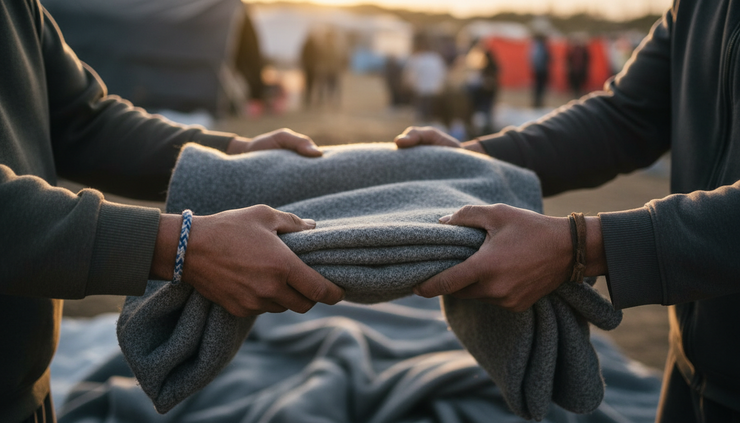
It looks like a clinic reopening after a flood. It looks like a child returning to class in a temporary learning space. It looks like a family receiving clean water before sickness spreads. It looks like local volunteers checking on older neighbors during extreme heat. It looks like a convoy reaching a town that has been cut off for weeks.
These moments do not erase loss. They prove that organized compassion still matters.
World Humanitarian Day 2026 should remind the globe that humanitarian action is one of the clearest measures of shared humanity. The day honors those who run toward danger to help strangers. It calls leaders to protect civilians and aid workers. It asks communities to choose facts over rumors, dignity over indifference, and solidarity over distance.
The world will face new emergencies in 2026. Some will make headlines. Others will unfold quietly. The real test is whether help reaches people based on need, wherever they are, whoever they are.
A safer world begins with that promise and the successful deployment of competent human resources.


Comments